


















This is a major shift. Anthropic is embedding invisible watermarks into all content generated by Claude, text and files alike, to trace its origin. A signal that’s imperceptible when you read it, yet survives copy-paste. A first at this scale in generative AI.
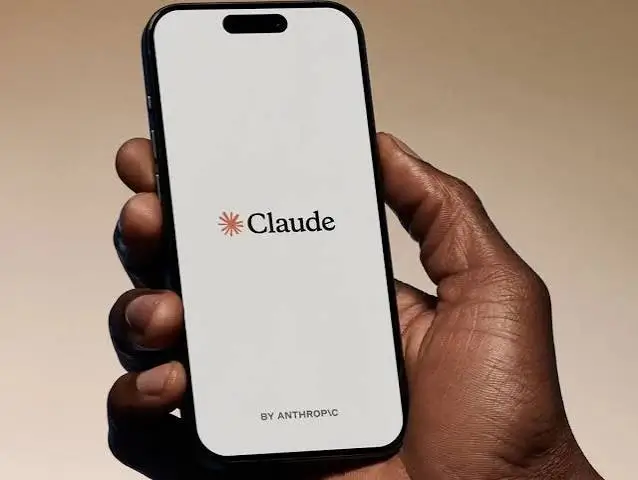
Claude on a smartphone – Claude
Why now?
It’s striking news, but in the current context it’s not that surprising. As AI-produced content becomes ubiquitous and telling AI and human writing apart grows increasingly difficult, more transparency is becoming essential. This is exactly what the new European legislation is about: Article 50 of the EU Artificial Intelligence Act requires AI systems to make their content markable and identifiable. One notable detail: the marking applies in every country where its chatbot is offered, not just within the European Union.
Anthropic confirms that every Claude model launched on or after August 2, 2026 will meet this requirement from day one, see Claude support article on the topic.
How will content generated by Claude be marked?
For text 📝
A watermark is a mark deliberately invisible to the naked eye but readable by machines, embedded directly within content, acting as a signature for whoever produced it. The term originally comes from paper: that faint pattern, visible when held up to the light, used to authenticate a banknote or an official document. The idea is the same for AI, only applied to text.
In practice, the watermark is inserted directly into the generated words. It’s imperceptible as you read, no matter how you read the text. According to Anthropic, it changes neither the meaning, nor the quality, nor the readability of the response. And because it’s an integral part of the text, it survives copy-paste and can withstand some editing.
For files 📂
For files, it’s the opposite: instead of marking the content itself, Claude attaches an invisible label around the file. When it generates a supported file type .svg, .png or .jpg, it adds signed provenance metadata. This metadata follows the open standard of the Coalition for Content Provenance and Authenticity (C2PA), already used across the industry to record a content’s origin. In practice, it acts as a kind of digital seal: when present, it signals that the file passed through Claude, and it makes it possible to detect whether the file has been altered since.
How does this watermark actually work?
On this point, Anthropic stays tight-lipped: the company hasn’t published any technical details about its exact method. One theory is circulating widely online, pushed in particular by sites selling “watermark removal” tools: that of invisible Unicode characters (zero-width spaces, word joiners, and so on) slipped into the text. Nothing on Anthropic’s side confirms this lead today, and this type of character has precisely the drawback of disappearing easily during a simple text cleanup, which contradicts the promise of a watermark that withstands editing.
The most credible hypothesis remains the statistical watermark: a slight bias in word choice at generation time, invisible at the scale of a sentence but detectable across a longer passage. But here again, Anthropic has confirmed nothing publicly. One thing is certain: no public detection tool exists to date. Anthropic says it intends to publish technical documentation on the subject, with no specific date.
“We’ll share details on detection mechanisms in forthcoming technical documentation.” — Claude
⚠️ In the meantime, be wary of online services claiming to detect or remove this watermark: without Anthropic’s exact method, no third-party tool can guarantee it reads, or erases the mark.
What are the limits?
Anthropic warns against reading the signal too literally.
- The presence of a watermark doesn’t prove that a piece of content was written entirely by AI. A user may have submitted their own text to Claude to correct, translate or summarize it; the mark is then present, even though the ideas come from a human.
- Its absence doesn’t prove human authorship either: the content may come from an earlier model, have been heavily rewritten or translated, or be too short to carry a reliable signal.
In other words, the system provides an indication of provenance, not proof of authorship.
What are our options?
The robustness of the text watermark isn’t uniform; it depends on how the text has been reworked and transferred.
| Action | Effect on detection |
|---|---|
| Copy-paste into another program | None, the signal travels with the text ❌ |
| Light edits | May persist ⚠️ |
| Deep rewrite or paraphrase | The mark may no longer be detectable ✅ |
| Translation into another language | The mark may no longer be detectable ✅ |
| Mixing with other writing | The mark may no longer be detectable ✅ |
| Format conversion, re-saving, screenshot | Removes the C2PA metadata (files, not text) ✅ |
What's the impact on SEO?
As of today, the watermark doesn’t appear to have any negative impact on search rankings. Ranking would still rest on the same fundamentals: quality, usefulness and experience signals, in other words, the E-E-A-T framework.
Google has in fact been explicit since 2023: using AI isn’t penalized in itself (source); what is penalized is producing low-value content designed to manipulate rankings. An invisible provenance marker would therefore change nothing in this equation, all the more so since no search engine currently reads Anthropic’s proprietary watermark.
"Appropriate use of AI or automation is not against our guidelines"
FAQ
There's no mention of any opt-out. Because the watermarking is applied "at the model level," it's present regardless of the Claude product or surface the text comes from. It's a measure to comply with the EU Code of Practice on the transparency of AI-generated content, not a product feature.
Yes. Generated text carries a durable, detectable mark showing that an AI was involved. For most teams this is inconsequential; but in certain legal, journalistic or competitive contexts, it creates a disclosure surface that didn't exist before.
No. Around 190 organizations signed the European Code before it took effect on August 2, 2026, including 82 on Section 1, the one covering machine-readable marking. Alongside Anthropic: Google (signature announced July 24), Meta, Microsoft, OpenAI, Mistral, Cohere.
It's the "transparency" arm of the AI Act. It requires providers of AI systems to ensure that generated outputs are marked in a machine-readable format and detectable as artificially generated or manipulated. These obligations took effect on August 2, 2026.
No. Anthropic states that the marking changes neither the meaning, nor the quality, nor the readability of the response. Technically, it works on statistically near-equivalent word choices, which explains both the lack of impact on quality and the fact that a text that's too short carries no usable signal.
Not yet, for lack of a public tool. And even down the line, caution is warranted: Anthropic reminds us that a detected mark only means content may have been processed by Claude, not that Claude authored it. The risk is that this signal gets treated as a verdict, the way AI detectors were in the previous era, when it remains probabilistic.